This blog will examine most of the inequities involving the law, immigrations, education, employment, political, health care. It will showcase current news events concerning US and world economic, Middle-eastern revolt issues while trying to explain and resolve those issues.
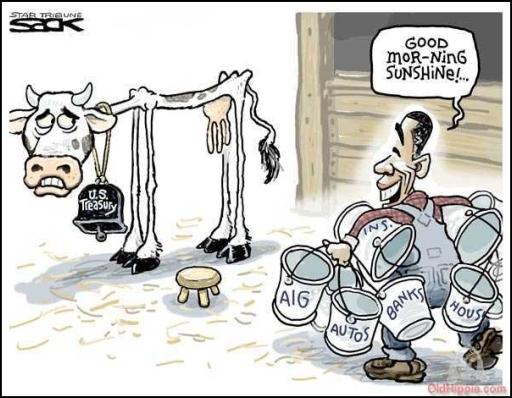
President Obama tacitly endorsed the violent protests of the Anti Wall Street movement.
"I think people are frustrated and the protesters are giving voice to a more broad-based suspicion about how our financial system works," Obama told reporters in a televised speech.
Obama used the anger and violence of the protests to gain political cover for the devastating effects of the Dodd-Frank regulationson financial institutions. Dodd-Frank has been criticized by many banks and financial institutions as being anti-growth and too restrictive.
The recent increase of ATM fees by Bank of America was used as an example used by the President, saying, “For us to have a healthy financial system, that requires that banks and other financial institution systems compete on the basis of the best service and the best products and the best price… and it can't be competing on the basis of hidden fees, deceptive practices or derivative cocktails that nobody understands and that expose the entire economy to enormous risks. That's what Dodd-Frank was designed to do," Obama said to a somewhat incredulous audience.
Many members of the press grimaced when Mr. Obama suggested that he would use the Dodd-Frank legislation as a base for his upcoming re-election campaign, essentially implying that he would try to politicize the ancient anti-Wall Street populist movement.
The president did add that banks can charge what they like as long as there is accountability and transparency, and that he felt it was appropriate for the government to play an oversight role.
An American Nazi Party Supporter At Wall Street Occupation
It’s not quite the ringing endorsement they were hoping for butOccupy Wall Street protesterson Monday receive the support of the American Nazi Party, more commonly referred to as the ANP.
Also known as the National Socialist Party the group released the following statement on their website:
Occupy Wall Street is taylor made for National Socialists, while they urge their members to “Produce some flyers explaining the ‘Jew banker’ influence—don't wear anything marking you as an ‘evil racist’—and get out there and spread the word!
The ANP isn’t the first communist movement to back Occupy Wall Street, the Communist Party USA has also backed protesters and during a board member speech on Saturday in Chicago they told the crowd:
“I bring greetings and solidarity from the Communist Party. We are here, marching side-by-side. We’ll sleep here. We’ll be with this movement ’til the very—’til we make all the changes that we know we have to make.”
While many protesters don’t agree with the parties overall message they did meet the show of support with hoots and applause.
I don’t believe in the overall messages that are routinely being delivered by the ANP or the Communist Party USA, because anarchy of the highest level is it's end game designed to distabolize America.
Obama has vowed he will push communist financial reform’s through before he leaves office. Draconian legislation like Dodd-Frank and the ridiculous Volker Rule are key to the communist agenda set by the current administration.
ing towards a 2012 election without hope of victory due to his inability to create jobs or spark a significant recovery even after spending a record amount during his time in office.
Obama launched an onslaught against banks and Republicans for working to block financial reform and return America to prosperity, Obama, now one of the least popular Presidents in history, is yet again using a populist tone to cash in on public anger over Wall Street practices.
Obama already has a reputation for his anti-business stance starting with his harsh rhetoric about corporate compensation at the beginning of his term.
The US Communist party said of the 2008 election of Obama: Obama’s 2008 victory was more than a progressive move; it was a dialectical leap ushering in a qualitatively new era of struggle. Marx once compared revolutionary struggle with the work of the mole, who sometimes burrows so far beneath the ground that he leaves no trace of his movement on the surface. This is the old revolutionary ‘mole,’ not only showing his traces on the surface but also breaking through.
The old pattern of politics as usual has been broken. It may not have happened as we expected but what matters is that it happened. The message is clear: We can and must defeat the ultra-right, by uniting the broadest possible coalition that will represent an overwhelming majority of the people in a new political dynamic.
Such euphoria is best understood as a measure of how demoralized liberals have been by the popular reaction to the nation's worst economic crisis since the Depression. They figured Americans would blame Wall Street's near meltdown on greedy speculators and turn to government to keep rogue capitalists in check. The last thing they expected was a genuine grass roots uprising on the right, which leveled its pitchforks at "big government" more than malefactors of great wealth.
Liberals also were nonplussed by how quickly the diffuse and leaderless Tea Parties spread across the landscape, took over the Republican Party during the 2010 elections, and used their victories to wrest the political initiative from President Obama. Now they're hoping that the OWS protests will congeal into a progressive counterweight to the Tea Party that can stop the nation's rightward lurch.
Occupy Miami Protesters
Not likely. The protests don't seem to be swelling into a mass movement. And they're being hijacked by the usual congeries of lefty fringe groups, which are diluting the Occupiers' most compelling message--that America is increasingly a land of unequal opportunity where hard work and self-reliance are no longer rewarded. Most important, though, the counterweight theory itself is flawed.
Bedding A Radical
In this political version of the laws of thermodynamics, right-wing extremism provokes an equal and opposite reaction on the left. The center is tugged back to the left, equilibrium is restored, and liberals can compete for votes in the persuadable middle on an equal footing with conservatives. Well, not quite equal: Conservatives still outnumber liberals, and moderates still outnumber conservatives. Essentially, this means liberals need to win big among moderates to win elections. Getting in bed with radicals sporting slogans like "Eat the Rich" probably won't help them woo moderates.
Many liberals believe the embarrassing disparity in voting strength stems from a passion gap. The argument goes like this: Conservatives appeal to voters on a gut level; liberals invoke fictional analysis and irrational arguments. It's no contest: Demagoguery trumps sweet reasoning every time because, let's face it, lots of voters are none too bright. This is why the supremely rational Barack Obama is sinking like a stone. Liberals need more heat, not light, and OWS protesters are not fucused. After all, hasn't the Tea Party shown us how to win? Its cadres have purged GOP moderates, demanded absolute fealty to litmus tests on taxes and other issues, and forced Obama to swallow big spending cuts to avoid a government shut-down. Can't the left get similarly tough with wishy-washy Democrats?
It's likely, however, that the Tea Party's success owes more to economic distress than to ideological stridency. When Americans are hurting, the party in charge invariably takes a hit. Before accepting the notion that liberals need a Tea Party of their own, it's worth noting that the movement's influence may be waning. It's telling that Mitt Romney--who arouses zero enthusiasm among the Tea Party faithful--nonetheless seems to be chugging steadily toward the GOP nomination. If he wins, does the Tea Party lose?
Let's put aside partisan calculations and ask a more basic question: How will more ideological enmity and polarization help solve the nation's problems? Further hollowing out America's political center isn't the way to overcome the right or restore our political system's capacity to solve problems. Instead, conservatives need to seize the center, and shove the wingnuts back to the margins where they belong.
I Dygress
After all, the broad American center is angry too, and for the same basic reasons as the protestors in Zuccotti Park. Cut through all the anti-capitalist claptrap and what you hear is the plaintive cry of a middle class in distress. Who isn't angry that Washington bailed out the big banks--which almost immediately reaped fat profits and went back to handing out obscene bonuses--but couldn't offer effective help to the millions of middle class Americans who lost their jobs, their houses, and their savings? In fact, Occupiers and Tea Partiers are united in their disdain for Wall Street.
Michael Mandel
The nation's economic crisis--which is both structural and cyclical--has hit young Americans especially hard. As Progressive Policy Institute economist Michael Mandel has noted, college costs keep rising, but median wages for college graduates fell by 19 percent over the past decade. It costs more to get a degree that earns you less--if you can find a job. When OWS protesters complain that they've worked hard to get a good education, only to face bleak job prospects, they sound more like Bill Clinton than Noam Chomsky.
Utopian Remedy
The Eurozone debt crisis also clouds their future, threatening a relapse into recession. And it's dawning on young Americans that they're getting stuck with the bill for our own government's failure to control its borrowing and spending. Thanks to that bipartisan dereliction of duty, young people face a Hobson's Choice between austerity now, or a rising the tax burden in coming decades to pay for the baby boomers' escalating retirement costs.
The challenge for liberals is to underscore the common economic dilemmas facing these young OWS protesters and middle class Americans in general. This will require distinguishing between protesters' valid grievances and their utopian remedies; between calls for making competitive markets work for everyone, and demands that they be regulated out of existence; and between evidence-based indictments of growing inequality in the United States, and conspiracy theories that ascribe all our ills to the "top one percent."
A final point: Movements for radical change are sometimes necessary to force sensitive subjects onto the nation's political agenda. But not all radicals are simply liberals in a hurry. Those that advance their demands in the name of the fuller realization of America's creedal values have a shot at eventually winning wider public support. Examples include the anti-slavery, progressive (new deal), and civil rights movements. But radicals who demand revolution rather than reformation, and prescribe remedies contrary to those creedal values--see the Communists, the Weather Underground, the Black Panthers--provoke a powerful backlash.
As a baby boomer of a certain age, I'm not immune to the resin-scented whiffs of 1960s nostalgia emanating from the OWS protests. But I also recall how the upheavals of my youth helped to unravel the New Deal coalition, drive working class Democrats out of the party, and dethrone a humane and expansive liberalism as the nation's dominant political outlook. Today's liberals need to keep their eyes on the prize. Instead of wishing for a left-wing version of the Tea Party, they should concentrate on proving to America's angry middle that government can once again be a force for equal opportunity and upward mobility.
Conservative pundit Glenn Beck, whichrevealsthe radical Left’s plots to bring about “economic terrorism.” Despite the dangers posed by the plotters, however, the Department of Justice appears unlikely to seek an investigation. And the contrast between the DOJ's inaction regarding this latest episode and its aggressive prosecution of a much more benign "offender" engaged in the private minting and marketing of coins could not be more striking.
In a disturbing speech given on March 19 at the Left Forum, which took place at Pace University in New York City, by prominent union leader Steven Lerner (SEIU, photo left) to a select group of other prominent labor, progressive and community leaders, Lerner proposes committing “economic terrorism.”
Steven Lerner
Economic terrorism has been defined by the Geneva Center for Security Policy as “varied, coordinated and sophisticated or massive destabilizing actions in order to disrupt the economic and financial stability of a state a group of states or a society for ideological or religious motives.”
As recently as last Friday, someone was convicted of the crime of attempting to commit economic terrorism by the Department of Justice. Sixty-seven year oldBernard vonNothauswas convicted for making, possessing, and selling his own coins. Charged with “conspiracy against the United States,” NotHaus faces prison sentence for up to 15 years.
Anne Tompkins of the DOJ prosecuted the case and said that Nothaus was guilty of “attempts to undermine the legitimate currency of this country are simply a unique form of domestic terrorism.” She added, “While these forms of anti-government activities do not involve violence, they are every bit as insidious and represent a clear and present danger to the economic stability of this country.”
With that in mind, one must ask where the DOJ stands on the plots put forth by Steven Lerner this weekend at the Left Forum.
The Left Forum is one of the largest annual left wing conferences. Notable progressives like Frances Fox Piven were present at the conference, where Piven’s philosophy of destabilization is not only celebrated but touted as the foundation of all other notions discussed at the forum.
For example, one of the panelists said of Piven’s philosophy:
“We were talking about why unions are so invested because of their pension plans and why ungovernability, as Frances Fox Piven and Cloward taught us, you know, poor people’s movements are successful when they create conditions of ungovernability and then you win victories.”
In other words, destabilization is the goal.
Enter Steven Lerner.
Steven Lerner worked for SEIU but may have left when Stern did, though that cannot be confirmed because SEIU refuses to confirm any information. The Glenn Beck program made a number of attempts to confirm the information with SEIU, ranging from phone calls to emails, but SEIU will not verify if Lerner is or is not there.
Occupy Wall Street
This weekend, Lerner was introduced as Director of SEIU’s Banking and Finance Campaign, thereby making it a fair assumption that he may still be working for the organization. Lerner has been intricate to the various endeavors of the SEIU. He was the person on the Wall Street Reform campaign for the SEIU; he is the one responsible for the protests on lawns of people’s homes, most notably the lawn of the Bank of America executive. He also spearheaded the Justice for Janitors campaign, where protestors entered the busiest intersections in cities nationwide and dumped trash to interrupt traffic.
In other words, Lerner is no novice to underhanded union thuggery tactics.
Likewise, Lerner is a blogger for President Obama’s preferred publication, the Huffington Post. Wade Rathke, a titan of the progressive movement, refers to Lerner as “Brother Lerner.”
To boot, Lerner has had at least four confirmedvisitsto the White House, and one confirmed visit to the United States Treasury, in December 2010.
ACORN founder Wade Rathke
This is a man with connections.
At the Left Forum this past weekend, Lerner began by laying the foundation of his plot to commit economic terrorism, as defined by the Geneva Center. It begins by admitting the unions’ limitations:
Unions are almost dead. We cannot survive doing what we do, but the simple fact of the matter is community organizations are almost dead also and so I think if you think about what we need to do, it may give us some direction, which is essentially what the folks that are in charge-you know the big banks and everything-what they want is stability. There are actually extraordinary things we could do right now to start to destabilize the folks that are in power and start to rebuild a movement.
Again, destabilization is the ultimate goal. Here’s how Lerner begins to outline the proper steps towards destabilization:
For example, 10 percent of homeowners going back to where you started, a quarter of the people who own a home are underwater, right, their home they are paying more for it when it’s worth 10 percent of those people are in strategic default, meaning they are refusing to pay but they are staying in their home. That’s totally spontaneous, right? They figured out, ‘it takes a year to kick me out of my home because foreclosure is backed up. I’m going to say I won’t pay.’ It’s a good business decision. If you could double that number you would you could put banks at the edge of insolvency again.
Lerner continues:
What would happen if we could organize homeowners in mass to do a mortgage strike? Just say if we get half a million people to agree, we’ll agree we won’t pay our mortgages. It would literally cause a new financial crisis for the banks, not for us, we would be doing quite well because we wouldn’t be paying.
Troubled Asset Relief Program
On Tuesday’s episode of the Glenn Beck program, Beck explained, “Using a mass mortgage strike, and he also goes into student loans, he hopes to create a new financial crisis. Think of this. The whole reason that we did TARP (aside: Is there anyone here who thinks it was a great idea to do TARP?) was to bring us back from the brink. And here he is a man who’s been to the White House and is planning on detailing a plan to bring our financial institutions back to the brink.”
As noted by Beck, if the plotters actually succeeded in their ploys, all of the TARP funds will have been wasted.
Staging a mass mortgage strike is only the beginning, however. Lerner goes on:
The folks that control this country care about one thing-how the stock market does, how the bond market does and what their bonuses is. So I think we need to have a very simple strategy. How do we bring down the stock market, how do we bring down their bonuses, how do we interfere with their ability to be rich and that means we have to politically isolate them, economically isolate them and disrupt them?
Unfortunately, Lerner refuses to divulge too much information, in fear that there may be police agents in the crowd:
I don’t want to give details because I don’t know which police agents are in the room.
Beck responded to this. “He’s not going to give a lot of details because he’s afraid there might be police in the audience. There wasn’t,” He added with a smirk, “But we might have been there.”
Naturally, an underground movement such as the one Lerner is attempting to foster requires a good scapegoat. Don’t worry. They have that covered as well:
A bunch of us around the country think about who would be a really good company to hate? We decided that would be JP Morgan Chase based here in New York, and so we’re going to roll out over the next couple of months…we’re looking at is in first week of May can we get enough people together-we’re starting now-to really have a week of action in New York.
In addition to the disturbing nature of the goals of these community organizers is the knowledge that President Obama has been a leading advocate for the SEIU.
During campaign season, Obama said of the organization,“I’ve spent my entire adult life working with SEIU. I’m not a newcomer to this.”
Acknowledging the President’s alliance with the group, Beck asks, “Is it reasonable, America, to believe that Obama doesn’t know Steven Lerner? He is one of most influential-he is praised by everyone and has been around since the mid 1990s.”
Though the plan to bring about economic destruction is apparently underway, according to Lerner, there is an opportunity to halt it in its tracks.
Beck notes, “Lerner was also clear that this could not have the hallmark of the Unions. It could not be known as a union deal. It has to be grassroots.”
According to Lerner:
Labor can’t lead, but we are a critical part of it; we do have money, we have millions of members who are furious. But I don’t think this kind of movement can happen unless actually community groups and other activists take this lead, and that’s a big reversal of how a lot of these coalitions even thought about it. And so unions helping community groups or community groups helping us narrowly. If we really believe that we are in a transformative stage of what’s happening in capitalism, then we need to confront this in a serious way and develop a real ability to put a boot in the wheel; then we have to think not about labor and community alliances, we have to think about how together we are building something that really has the capacity to disrupt how the system operates.
It seems then logical to believe that if the movement isexposedas a “union deal,” it may be stopped, particularly since the average union member is moderate and does not seek to witness the destruction of the American economy.
In California, for example, the California Public Employees’ Retirement System (CAlPERS) manages pension and health benefits for more than a million California public employees, and does so by investing the pension funds in the stock market. If the stock market were to crash at the hands of Lerner and his cohorts, the average union member would suffer.
For this reason, Beck appealed to the average moderate union member at the end of Tuesday’s program:
This evil must be rooted out from the inside. You must stand in your own union-a union that is silent or stands next to these unions is part of the problem. Fumigate the halls of your union offices because if you don’t rat these people out, we all lose.
Since this video footage has been uncovered, the Department of Justice, JP Morgan Chase, and the White House have all been alerted to Lerner’s plot. Not one of those entities had a comment on the subject.
Given the DOJ’s history of failing to prosecute clear-cut cases of criminality, coupled with its intrusiveness in cases that are seemingly out of its realm of jurisdiction, one may not feel optimistic that the Justice Department will be launching an investigation into this matter anytime soon.
Prime Minister Benjamin Netanyahu is already thinking about the next abduction of an Israeli soldier, and he knows it will happen. Abduction warnings and attempts are virtually a daily occurrence, part of the routines of Israeli prime ministers over the decades. It's been that way in the five years since Gilad Shalit was abducted, and it will be that way after he comes home. And when the next abduction occurs Netanyahu will have to deal not only with the issue of the price to pay but also that of the proper response to the act itself.
Ehud Goldwasser and Eldad Regev
There are two precedents he could follow: Shalit's capture in June 2006, when Israel's response was limited, and the July 2006 abduction of Ehud Goldwasser and Eldad Regev, which launched the Second Lebanon War. Netanyahu has no doubt about which approach he would take, and it's not the June 2006 model.
A few cabinet members, perhaps to assuage their own conscience, have promised that next time any prisoner exchange would be on a one-for-one basis. Netanyahu, in private conversation, has been more cautious in his language. He isn't ready to commit. He learned first-hand that real life is much more complicated than writing books about the fight against terror. Indeed, there is no job that is more sobering than being prime minister of Israel.
People who have spoken to Netanyahu in the past two days, while he was at his home in Caesarea, found him to be very relaxed. He is at peace with himself. This was the hardest decision he has had to make since reassuming the prime minister's post in 2009.
Just four hours before Tuesday's cabinet meeting, he wasn't convinced he had a majority for the deal. In retrospect, in light of the 26 to 3 vote in favor, that seems a little odd, but uncertainty prevailed in the Prime Minister's Office as evening approached. It appeared that around half of the Likud cabinet ministers would oppose the deal, in addition to all of the Yisrael Beiteinu ministers and one from Habayit Hayehudi, bringing the vote to a near draw. Ehud Barak, who had supported a deal from the moment he was appointed defense minister, assured Netanyahu that from the minute a prime minister decides to go ahead with such a move with full force and moral authority he will get approval even for decisions the right wing finds hard to digest. Barak was talking about Shalit, but he was probably also referring to future decisions that are late in coming, such as the resumption of negotiations with the Palestinians.
Barak faced a similar situation near the end of the Olmert government, and he has not a shadow of a doubt, when considering the record of Olmert and Netanyahu, who demonstrated leadership and courage and who got cold feet. In private conversations, Barak has said it is Netanyahu who has shown leadership. And without engaging in speculation about the psychological dynamic between them, perhaps Barak's presence helped Netanyahu to decide.
I personally think Netanyahu got beat on this deal? Israel doesn't need to conduct negotiations for captives. The army is permitted to go to war to save even just one person.
Differing opinions have been voiced by a number of leading rabbis regarding the exchange deal for Gilad Schalit.
Rabbi Benny Lau
The influential Rabbi Benny Lau of the Ramban Synagogue in Jerusalem’s Greek Colony argued in favor of the deal on Wednesday, saying that the changing geopolitical situation of the Middle East meant that the circumstances of Schalit’s captivity were such that his life was in certain danger.
Paradise Cove, that’s the name of the gated community where low income, and single parent families that makes $27.550 a year or less, can rents a nine-bedroom / six bathroom home with soaring ceilings, a gas-fueled fireplace and an oversize walk-in closet in the largest bedroom. The master bath even includes an enclosed toilet room, a feature popular in mini-mansions.
It's a scene from "The Jerk", But it works for this application
"This is something you only see on TV," a future tenant says during a tour of the approximately 8,600-square-foot home. "I never thought I’d have anything like this." The development has a kidney-shaped swimming pool.
Their previous home in inner city was public housing, the woman says, and her six children were crammed into one bedroom. After her refrigerator caught fire, her landlord replaced it with an outdated brown model. She now has gleaming-white appliances.
This family can thank wealth re-distribrution. They participates in a government program for low-income families that subsidizes about two thirds her $6,400 monthly rent. The program, known as Section 8, has for decades put families in functional but basic homes and apartments, sometimes in less-than-desirable communities.
And, truth be known, many if not most of these people do not bother to pay their share of the rent. But the landlords are happy just to get the government money, and so allow them to continue to reside there. So this is often a ‘rent free’ situation for the tenant.
Housing Boom Surplus Homes
But overbuilding during the housing boom has left so many homes available that landlords, desperate for renters, are wooing Section 8 recipients, whose government subsidies are delivered electronically, guarantee the landlord gets paid. As a result, Section 8 recipients suddenly have a housing smorgasbord.
Plenty of average housing stock remains in many places, but in certain markets, there are also more upscale selections.On the website GoSection8.com, landlords nationwide tout boom-era showpieces—replete with "great rooms," backyard swimming pools and built-in stainless-steel barbecue grills—that once sold for hundreds of thousands of dollars.Las Vegas has been one of the nation’s hardest-hit real-estate markets.
Some renters are getting pickier. Instead of accepting basic homes, they’re going for "another property that’s either bigger or in a better area or has more bedrooms. Before, they tended to take whatever they could get."
Though some neighbors have long contended that government-subsidized tenants increase crime and depress property values, some now say that having a house occupied is better than leaving it vacant, which attracts vandalism and other problems…
Racists. Still, I suspect that there is a lot of ‘vandalism,’ even when these houses are ‘occupied.’
Another section 8 recipient is looking for an apartment near Newport News, Va.Her current apartment in Philadelphia has a red brick dining-room floor and industrial-style windows.She longs for a dishwasher and a washer and dryer.
Future Section 8 Home
Several rental listings around Newport News spotted on GoSection8.com have impressed her.One that stands out is a townhouse with a community weight room and a "theater area" with a big-screen TV for residents. Another perk: central air conditioning, which she now lacks."I was like, ‘This can’t be Section 8 at all,"’ she says. "This is beautiful."
Remember when ‘Section 8’ used to mean ‘crazy’? Some things never change.
The $18.1 billion Housing and Urban Development program offers more than 2 million families the chance to live outside of housing projects. Recipients pay a certain percentage of their income, typically no more than 30%, each month.
“Typically,” the "recipients" pay nothing at all these days.
Landlord participation is voluntary, and the home must pass an inspection. With no official centralized location for available properties, it is impossible to know how many units are available, though the count appears to be rising.When GoSection8.com was launched in 2004, a few hundred listings occurred monthly. Now, 700 or more can come daily, says Richard Cupelli, the site’s president. "The amount of new owners that are seeking Section 8 tenants is through the roof."…
Love Government Subsidies
Last year, Mr. Davtyan, who rents to Section 8 tenants, paid $60,000 in cash for a four-bedroom house in North Las Vegas. He charges rent of $1,436 each month, giving him a profit of about $15,000 per year after insurance and property taxes, he says. He also paid $60,000 for a six-bedroom house in central Las Vegas 18 months ago that once commanded nearly $300,000. It rents for nearly $1,700 a month.
"It’s the most lucrative way to go right now," he says. "Nowhere else does your money make that kind of return."
And the beauty of this is that it is a self-generating program. Having ‘Section 8′ housing in the neighborhood means that the other houses will soon lose their value and be foreclosed upon. Which means more Section 8 housing. And the cycle continues.
It is more wealth redistribution, just by another means. It is ‘social justice’ at work.