Showing posts with label Syrian Un-Rest. Show all posts

Friday, June 15, 2012

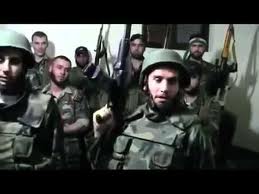
Assad's soldier committing sex abuse acts


Syrian security forces, soldiers and pro-regime militias used sexual violence to torture people in detention and sexually abused women and girls as young as 12 in raids, a new report said Friday.

The Human Rights Watch report, based on interviews with victims of sexual abuse, tells of shocking accounts of rape, penetration with objects, sexual groping, prolonged forced nudity, and electroshock and beatings to genitalia.
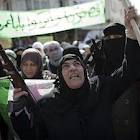
"Syrian security forces have used sexual violence to humiliate and degrade detainees with complete impunity," said Sarah Leah Whitson, Middle East director of the human rights organization.

"The assaults are not limited to detention facilities -- government forces and pro-government shabiha militia members have also sexually assaulted women and girls during home raids and residential sweeps."

The details emerged, the report said, despite a stigma surrounding sexual violence and a reluctance to talk publicly because of fear and shame. It is the latest report of abuses in the turbulent country, in the throes of a 15-month-old nationwide uprising after the government launched a crackdown against protesters.

Male and female detainees -- many of whom were political activists or simply attended protests -- reported "sexual torture" at Military Intelligence Branch 248 and Branch 235 (known as "Palestine Branch") in Damascus; the military intelligence facilities in Jisr al-Shughur, Idlib, and Homs; the political security branch in Latakia; the air force intelligence branches in Mezze, Latakia, and Homs; and the Idlib Central Prison.

Using pseudonyms, Human Rights Watch recounted the victims' stories.
Khalil, who had been detained in Idlib province, described extensive torture over a three-day period.

"They forced me to undress. Then they started squeezing my fingers with pliers. They used a stapler to put nails in my fingers, chest, and ears. I was only allowed to take them out if I spoke. The nails in the ears were the most painful. They used two wires hooked up to a car battery to give me electric shocks. They used electric stun-guns on my genitals twice. I thought I would never see my family again."

Nour, detained at the "Palestine Branch," said she and three other women "were repeatedly raped."

"They would take turns with us. More than one man would rape you. It wasn't every day, but it was regular ... "

Amer, imprisoned in Latakia, said, "They undressed me, tied my hands behind my back, and hit me on my private parts."
Samih, a man detained in Latakia, described beatings and "rape for the boys."

"We would see them when the guards brought them back to the cell. It's indescribable. You can't talk about it. One boy came into the cell bleeding from behind. He couldn't walk. It was something they just did to the boys. We would cry for them."

Toufiq, a military defector, said a friend in his unit admitted to having participated in a gang rape of two women during a home raid in Homs. He said saw video on his friend's cell phone that confirmed the gang rape.

Suha said Shabiha members raped her 28-year-old neighbor in Homs province. Selma, also in Homs province, heard her neighbors being raped. Yousef said he watched soldiers from security forces rape his wife in Daraa.

Women in Syria and those who've fled to neighboring countries have had a tough time getting help. Emergency responders know about the abuse because they have worked with sexual abuse survivors.

A women's rights activist, called Leila, said Syrians have limited access to medical and psychological treatment and have worked to provide abortions and safe houses. She said her group worked to help two teenage girls raped by Shabiha members during a house raid.

Human Rights Watch lacks evidence that high-ranking officers commanded their troops to commit sexual violence during home searches, ground operations or in detention. But commanders in many of the cases "knew or should have known" about the crimes, the group said.

"Information received by Human Rights Watch, including from army and security force defectors, indicates that no action has been taken to investigate or punish government forces and shabiha who commit acts of sexual violence or to prevent them from committing such acts in the future," the report said.

"The international community urgently needs to address the human rights violations going on in Syria," Human Rights Watch's Whitson said. "The Security Council should send a strong signal to the Assad government that they will be held accountable for sexual violence and other human rights violations -- by referring the situation to the ICC," the International Criminal Court.

Wednesday, April 4, 2012

Bashar al-Assad Cannot Survive Much Longer


Rifaat al-Assad
Rifaat al-Assad said that the level of violence on the streets was too high for his nephew to survive.
Mr. Assad has lived in exile since he unsuccessfully tried to seize power from his brother, Hafez, in the 1980s.
In February 1982, he led a military assault on Hama to suppress an uprising by the Muslim Brotherhood, leaving between 10,000 and 25,000 people dead.
Jakob Kellenberger


Meanwhile, the head of the International Committee of the Red Cross (ICRC), Jakob Kellenberger, is meeting top Syrian officials in Damascus to try to get them to allow aid workers better access to those who have been wounded or displaced by the conflict.


Mr. Kellenberger will also press the Syrian authorities to implement a daily two-hour ceasefire, as stipulated in the peace plan proposed by the UN and Arab League envoy, Kofi Annan.
Kofi Annan


On Monday, Mr. Annan urged the UN Security council to set a deadline of 10 April for the plan to come into force. Syria has agreed to the deadline.
Mr. Annan's spokesman, Ahmed Fawzi, said yesterday that an advance team from the UN's Department of Peacekeeping Operations (DPKO) would arrive in Damascus "in the next 48 hours" to discuss the deployment of international monitors.
Although Rifaat al-Assad tried to oust Hafez in a coup while he was recovering from a heart attack and was effectively sent into exile in 1984, he was only formally stripped of his position as vice-president in 1998.
Bashar ai-Assad


When Bashar became president following his father's death in 2000, Rifaat criticized the succession as a "real farce and an unconstitutional piece of theatre". He considered himself the legitimate successor.
BBC Middle East editor Jeremy Bowen says that on one level, it is not surprising that Rifaat - from the vantage point of a gilded exile on one of Paris's smartest avenues - has harsh words for the president.
But the points Rifaat makes are widely accepted among the opponents of the Assad regime both in the West and in the Arab world.
The problems are now general to all parts of Syria - there are no places that have escaped violence - so I don't think Bashar can stay in power much longer" Mr. Assad said in an interview with the BBC. "I would say, though, that he should stay so he can co-operate with a new government and offer the experience he has."
Support For Assad


Rifaat insisted that the Assad family was still "pretty much accepted by the Syrian people.
A commission should go from the Arab League and the [UN] Security Council to monitor free and transparent elections.
Then you will see that the Assad family has got much more importance and support than some of the meaningless figures [of the opposition Syrian National Council] who we see on TV screens now."
What Rifaat meant by that was that he could make a good president - highly unlikely given his years of exile. The SNC has called for Rifaat al-Assad to be subjected to international sanctions like current senior officials in the Syrian government because of his past crimes.
On Monday, Mr. Annan told the UN Security Council that President Assad had agreed to withdraw security forces from major population centers by 10 April.
UN officials and diplomats said the monitors would probably be drawn from other peacekeeping forces in the region and could not be established without an end to the fighting, agreement by all parties and a Security Council mandate.
chairwoman Susan Rice


"We hope that the Syrian authorities will implement fully the commitments that they have made without any conditions," said US permanent representative and Security Council chairwoman Susan Rice. "And should they do so, we will expect the opposition to follow suit within 48 hours."
Mr. Annan's spokesman, Ahmed Fawzi, later said Damascus had committed to begin withdrawing its forces on Sunday and to finish by 10 April, with a general ceasefire within 48 hours contingent on that withdrawal.
Ms Rice also pointed out that the ceasefire was only part of Mr. Annan's peace plan, which also calls for a political process to address the aspirations of the Syrian people, release of detainees, delivery of humanitarian aid, free movement for journalists, and right to protest.
"We have seen promises made and promises broken," she said. "We have seen commitments to end violence followed by massive intensification of violence. The proof is in the actions, not the words."
Free Syrian Army


On Sunday, Gulf Arab states agreed to pay the salaries and other costs of the rebel Free Syrian Army (FSA). The money will be distributed through the main opposition coalition, the Syrian National Council (SNC).
The decision was announced at a meeting in Istanbul of the "Friends of Syria" - a group of 83 countries backing political change.

Wednesday, February 15, 2012

Russia's Proxy.


As the Arab League agreed to go to the United Nations Security Council with a resolution calling for Syrian President Bashar Al-Assad to step down, Russia was reportedly doing a major arms deal with the beleaguered regime.
Yak-130 combat aircraft
The $550 million agreement to sell 36 Yak-130 combat aircraft will not do anything to tip the balance in favor of the Al-Assad regime, which has been engaged in a 10-month conflict with anti-government opposition. But Russia is almost certainly providing the arms Damascus needs to hold back the rebels as well as mounting a diplomatic defense of its friend at the U.N.
In a rare glimpse into the Russia-Syria arms trade, a ship loaded with ammunition from Russia was briefly detained in Cyprus earlier this month before continuing its journey unmolested to the Syrian port of Tartus. Foreign Minister Sergey Lavrov has vowed that Russia will veto any sanctions as "unfair and counterproductive."


Minister Sergey Lavrov
"Syria is an important customer for the Russian military industry and the industry is quite keen to maintain the relationship," Fyodor Lukyanov, editor-in of the Moscow based foreign policy journal was quoted to say "Syria is one of the few remaining customers in the region and it hosts the only military base - a small one but still a base - that Russia still has outside its own borders."
As the West - now joined by the Arab League - presses the Syrian president ever harder, Russia has emerged as his most important ally. Iran also backs the Damascus regime, but Tehran itself faces growing diplomatic isolation over its nuclear program and doesn't wield a Security Council veto. China is opposed to Syrian sanctions, too, but analysts say it is likely to follow whatever line Moscow adopts.
Russia's warm ties with Syria, and more exactly the Al-Assad family regime that has ruled the country four decades, starts with arms sales but it goes much deeper.
Hafez al-Assad


In the final two decades of the Cold War era, when the Soviet Union was a superpower competing for global influence with the U.S., Syria was its staunchest ally in the Middle East. Bashar Al-Assad's father and predecessor Hafez armed his troops with Soviet weapons and advanced Moscow's interests in the region.
With the collapse of communism and with Syria's deteriorating economy, the relationship is not what it once was. But Russia maintains a naval base at Tartus and the two governments share a distrust of the West and its motives.
Indeed, the view from Moscow of what is happening in Syria is very different than the one in Washington or Brussels. Where the West sees events in Syria as a popular uprising against a repressive regime, Russia shares Damascus' take, which sees the rebellion as a conspiracy by the Gulf countries to bring down an ally of their foe Iran.
"Saudi Arabia, Qatar and others see this as an opportunity, as a chance to push back Iranian influence," Lukyanov said. "From Russia's point of view, it's part of a geopolitical struggle between Iran and Saudi Arabia, where Syria is just a card."
Muamar Al-Qaddafi


For policymakers in Moscow, the situation in Syria looks remarkably similar to the one in Libya last year, where another long-time friend, Muamar Al-Qaddafi, faced what was seen in the West as a popular rebellion against autocracy. Russia reluctantly agreed not to veto a U.N. decision to impose a no-fly zone over the country.
The resolution, as Russia's leaders understood it, was to prevent Al-Qaddafi from killing civilians with aerial firepower. But the NATO forces that largely enforced the decision, Russians say, used it to level the playing field in the Libyan civil war to Al-Qaddafi's disadvantage. Moscow lost a friend and customer for its arms and is now out of favor with the successor National Transitional Council.
Zvi Magen

Zvi Magen, a former Israeli ambassador to Russia, said Russia's Syria policy is driven by memories of its Cold War rivalry with the U.S.
"There's an element of business in the arms deals, but it's mainly a political move to show the flag and to show support for Syria. It's mainly a function of Russian relations with America than with the Syrian regime," Magen said.
For that reason - and because Moscow realizes that Al-Assad's days are numbered - it may be prepared to make a deal with the U.S. over Syria, Magen believes.
Nevertheless, analysts agree that the importance of the arms trade as a factor in Moscow's calculations should not be overlooked. In an economy with few other industrial exports, Russia's military industry is an important earner of foreign exchange and a powerful domestic political force.


The Voice of Russia radio's website said in December that Russian arms exports reached $11 billion last year, a three-fold increase from 2000. While the country's biggest customers are India and China, the Middle East had been a growing market until the Arab Spring eliminated Al-Qaddafi and sanctions on Iran removed another customer. Syria alone, according to some estimates, accounted for 7 percent of all Russian arms sales in 2010.
A U.S. government study in 2009 estimated Russia's share of the Middle East arms market grew to more than 15 percent in the 2005-2008 period, five percentage points more than in 2001-2004 as it offered more creative financing and payment options, counter-trade, offsets, debt-swapping, and, in some cases, licensing production locally.
 Yakhont anti-ship cruise missiles 


Russia's Interfax news agency reported in early December that Russia delivered $300 million of Yakhont anti-ship cruise missiles to Syria.
With numbers like that, it is no wonder that Sergey Chemezov, the head of the state arms export company Rosoboronexport, made clear he had no intention of halting business with Syria.
"There are no sanctions whatsoever regarding Syria," he told Interfax on Wednesday. "If international sanctions are imposed by the U.N. Security Council, everything will change. And if there are no sanctions, why should we refuse to cooperate with this country? This is business after all."
Nevertheless, Magen said, Russia is careful not to sell Damascus weapons like S-300 surface-to-air missiles that could alter the regional balance of power.


Published with Blogger-droid v2.0.4

Friday, October 21, 2011

Look Out Assad; You're Next

Donald Rumsfeld


Former Secretary of Defense Donald Rumsfeld on Thursday warned Syrian leader Bashar al-Assad and Iranian leader Mahmoud Ahmadinejad to watch their backs.
Mahmoud Ahmadinejad                          Bashar al-Assad                          
Rumsfeld, responding to reports that Libyan leader Moammar Gadhafi was killed after months of uprising, tweeted: “al-Assad & Ahmadinejad best heed this morning's news on Gaddafi. Their people may decide they should be next.”
Protests erupted in Syria seven months ago, with many wanting to oust the Syrian leader, Bashar al-Assad. The country has been facing continuous political instability since then.


Iran faces heightened scrutiny after U.S. announced last Tuesday that officials suspect that country of being behind the attempt to murder Saudi Arabia’s ambassador to the U.S. last Tuesday.
The death of Muammar al-Qaddafi yesterday shows what may be in store for the leadership of Syrian President Bashar al-Assad's regime, which will probably be the next group of tyrants to be thrown out of office and potentially killed.

Syrian forces fired on protesters Friday, killing up to 14 people, activists said.
Inspired by the scenes of euphoria in Libya, Syrian protesters poured into the streets Friday and shouted that President Bashar Assad's regime will be the next to unravel now that ousted Libyan dictator Moammar Gadhafi is dead. 

Gadhafi is gone, your turn is coming, Bashar, protesters shouted on today in the central city of Hama, long a hotbed of resistance to the regime.
Syrian Up-rising

The Syrian uprising has proved remarkably resilient over the past seven months, but has shown some signs of stalling in recent weeks as the government forges ahead with a bloody crackdown that the U.N. estimates has killed more than 3,000 people.

Although the mass demonstrations in Syria have shaken one of the most authoritarian regimes in the Middle East, the opposition has made no major gains in recent months, it holds no territory and has no clear leadership.

Now the armed uprising in Libya that drove Gadhafi from power - albeit with NATO air support - appears to have breathed new life into the Syrian revolt.

"Our souls, our blood we sacrifice for you, Libya!" Syrian protesters chanted Friday.
Zine El Abidine Ben Ali and Hosni Mubarak
Others held signs linking Assad's fate to those of other deposed Arab leaders. Tunisia's Zine El Abidine Ben Ali has been driven into exile, and Egypt's Hosni Mubarak is in jail and facing charges of complicity in the deaths of more than 800 protesters in his country's uprising.

Ben Ali fled, Mubarak is in jail, Gadhafi is killed, Assad ... ? read one banner.
Still Alive At This Point

Gadhafi's death yesterday, after he was dragged from hiding in a drainage pipe, begging for his life, decisively ended the nearly 42-year regime that had turned the oil-rich country into an international pariah and his own personal fiefdom.

In many ways, the Syrian uprising has taken cues from the Libyans recently.

Syria's opposition formed a national council like the Libyans' National Transitional Council, hoping they could forge a united front against Assad that Syrians and the international community could rally behind.

And with the successes of armed Libyan revolutionaries present in their minds, many Syrian protesters say they are starting to see the limits of a peaceful movement, particularly when compared to the armed uprising in Libya. Some Syrians are now calling on protesters to take up arms and inviting foreign military action, hoisting signs that say "Where is NATO?" and urging the world to come to Syria's aid.

For the most part, Syrian opposition leaders have opposed foreign intervention.
There is no central call to arms by the opposition, in part because there is no clear leadership in the movement.
Syrian opposition

The Syrian opposition is disparate and fragmented, with various parties vying for power as they seek an end to more than 40 years of iron rule by Assad and his late father, Hafez.

There have been some clashes in border regions between Syrian forces and apparent defectors from the military, but they have not been widespread.

Still, the growing signs of armed resistance may accelerate the cycle of violence gripping the country by giving the government a pretext to use even greater firepower against its opponents. Authorities have already used tanks, snipers and gangster-like gunmen known as "shabiha" who operate as hired guns for the regime.

The regime has sealed off the country and prevented independent media coverage, making it difficult to verify events on the ground.

The Syrian Observatory for Human Rights, an activist group based in Britain, put Friday's death toll at 14 nationwide. Syria-based activist Mustafa Osso said six people were killed in the central city of Homs, and there were reports of casualties in other areas as well.

In the Syrian town of Qusair near the Lebanese border, Syrian forces closed all mosques to prevent people from gathering. The weekly protests usually begin as Syrians pour out of mosques following Friday afternoon prayers.

Gadhafi's death will boost the morale of Syrians, It will make them continue until they bring down the regime.

Monday, June 13, 2011

U.S. awaits world support to step in on Syrian strife


Syrian President Bashar "Butcher" Assad
Each day brings more atrocities in Syria. Fears of an imminent massacre by the regime has led thousands of refugees to flee into Turkey over the past few days. Yet the international community has been reluctant to outright demand that Syrian President Bashar Assad step down.
Daniel Kurtzer


Daniel Kurtzer, who has served as U.S. ambassador to Egypt and Israel and now heads Middle East policy studies at the Woodrow Wilson School of Public and International Affairs at Princeton University, spoke with editorial writer Julie O’Connor about why our ambiguous role in Libya has prevented stronger action in Syria.

Q. It was the fear of atrocities that led the West to intervene in Libya. Yet in Syria, where there’s already substantial evidence of civilian killings and torture, we’ve held back. Why this caution?

A. There are still significant holes in the analysis and policy underpinning what we’re doing in Libya. We intervened there on the basis of a vague notion, an international law called the Responsibility to Protect. But it’s very unclear what that means in practical terms. In Libya, we’re using it as a cover to support the rebels and oppose the regime, and in some ways, we’re using it for regime change — which is not actually what it’s supposed to represent. Given these uncertainties, there’s also going to be uncertainty about starting down that road in Syria. There’s been much greater difficulty in bringing about an international consensus to act.

The idea that civilians were being targeted by the regime, especially in Benghazi, was clearly a major factor in our intervention in Libya. The problem is, what do you do after you’ve protected that population? Do you then stop, or do you proceed?

Q. Do you believe the situation in Syria demonstrates the limitations of U.S. power?

A. I think it demonstrates the limitations of operating on the basis of this Responsibility to Protect. It’s not just U.S. policy; it’s a much larger question. If there’s something called a Responsibility to Protect, does it only extend to cases in which you can have an international consensus? Does it allow for the U.S. to act unilaterally? And is it wise to do so?

Q. Some say Turkey’s alliance with Syria’s protestors may lead Washington and the West to take a more assertive stance on Assad. Do you think that will happen?

A. It’s hard to tell. Turkey abstained on the United Nations Security Council’s resolution that authorized the use of force in Libya. While Turkey did not block NATO from acting in Libya, it certainly was not happy about it. The difference now may be the severity of what’s happening in Syria. Also, there’s an immediate impact on Turkey, from Syrian refugees crossing the border. If the Turks are now as concerned as we are about what’s going on in Syria, it may build on our NATO alliance and lead us to join forces in a way that’s helpful in relation to Syria.

Q. The U.S. and much of Europe have asked the United Nations Security Council to condemn the regime’s attacks, suggesting they amount to crimes against humanity. Is that likely to pass? What effect would it have?

A. I don’t know if it will pass, but it seems to have the support of a number of council members already. It may not stop Syria, but it certainly has an impact. Syria is a member of the international community and is concerned with public opinion, and may see this as the first step toward stronger sanctions and actions.

Q. Why not call for military action?

A. I think the U.S. is being careful about saying anything about military actions until we can build international support for it.

Q. Human Rights Watch recently came out with a report recounting Syrian war crimes, many against children. What has been the impact of the regime’s killings of children like 13-year-old Hamza al-Khatib, whose body showed signs of torture?

A. I think it’s played a tremendous role in eroding any kind of potential sympathy for the regime. It certainly burst the balloon of people’s beliefs that Assad was somehow a different kind of dictator, a benevolent dictator. Nobody should have believed it, and certainly nobody believes it now.

Q. How likely do you think it is a repeat of the infamous 1982 Hama massacre ordered by Assad’s father, which killed tens of thousands?

A. It’s quite possible. The Syrian government is showing no restraint, and it’s only a question of magnitude. If they have to kill a lot of people, they will. They’re showing no reason to suggest otherwise.

Q. Assad paints a picture of a bloody sectarian war developing out of this uprising if he falls from power. What are the chances of that?

A. I think it’s unlikely. He’s using it as an excuse, 100 percent. It’s a classic that goes back 300 years, to the French Revolution: “Après moi, le déluge,” meaning “After me, the flood.” That’s what French King Louis XV argued. It’s a false argument always used by dictators to justify continued repression.