Showing posts with label My Personal Openion. Show all posts

Friday, February 17, 2012

A Stealth Engagement of Iran


The past few weeks have made me scratch my head about the dramatically dissonant signals coming out of Washington about Iran. One possible conclusion is pure chaos and incompetence in the White House, with no one in control of the message.
But there is an alternative explanation that intrigues me. Perhaps messages are being delivered to multiple audiences more or less simultaneously, in a complicated effort to have your cake and eat it too. Or as I would like to believe, undertaking a new initiative with Iran while trying to disarm the political opposition.
Leon Panetta


In December, the action was entirely with Leon Panetta, the Secretary of Defense and former director of the CIA. On December 2, he gave a devastating appraisal of the negative consequences of a war with Iran. The Washington Post grumbled editorially that he should keep his opinions to himself, since he risked giving aid and comfort to Iran.  
Almost as if to apologize for his off-script remark, on Panetta’s next public outing to CBS Evening News on December 19, he speculated that Iran could hypothetically have a nuclear weapon in about a year. Then, on January 8, on “Face the Nation,”  Panetta declared: “Are they [Iran] trying to develop a nuclear weapon? No.” He quickly added, “our red line to Iran is do not develop a nuclear weapon. That’s a red line for us.” The first comment got remarkably little attention, while the “red line” comment predictably became the headline.
Was this amazing zig-zag performance? or just incompetence? which is not a Panetta trademark. Or was it evidence of two alternative policies fighting for position in the administration?
Hillary Clinton


On January 10, Secretary of State Hillary Clinton condemned Iran’s shift of enrichment activities to the deep underground Fordo facility outside Qom. But she coupled her statement with a strong pitch for a return to negotiations: “We reaffirm that our overall goal remains a comprehensive, negotiated solution that restores confidence in the exclusively peaceful nature of Iran’s nuclear program while respecting Iran’s right to the peaceful use of nuclear energy consistent with its obligations under the Non-Proliferation Treaty (NPT).” As usual, the condemnation was the lamest use of breathable air I've ever witnessed.
Secretary Bill Burns In Turkey
At almost exactly the same time, the Obama administration dispatched Deputy Secretary Bill Burns to Istanbul to discuss issues relating to Iran. Although his visit was billed as an effort to persuade Turkey to join in the next round of sanctions against Iran, there was widespread speculation that he was actually laying the groundwork for a new round of negotiation with Iran.
On the following day, an Iranian scientist was murdered in Tehran. By accident or design, it seemed timed to interfere with the Istanbul initiative. Secretary Clinton responded personally in the strongest terms, asserting unequivocally that the United States had nothing to do with any “violent acts inside Iran” and condemning such actions. The U.S. government had made no such intervention in previous assassination cases. If the perpetrator was, as widely suspected, Israel, this was a serious warning not to interfere in U.S. diplomatic efforts. And, of course, it was a reassurance to Iran, whose top negotiator, Ali Larjani, a close adviser to Supreme Leader Ali Khamenei, was just arriving in Istanbul.
Three days later, Larijani announced that Iran was willing to return to serious negotiations. That suggests that U.S. messages to Iran via the Turks had been fairly constructive and even persuasive. However, the headline in the New York Times the day before Larijani’s announcement was that the United States had delivered a stern warning to Iran not to close the Strait of Hormuz. This, it was reported, was delivered via a special channel (some might suspect the Turkish intermediaries), yet this careful leak completely washed out any mention of the Turkish initiative.
Since that time, there has been a leak to the effect that Israeli intelligence has been recruiting Iranian dissidents while pretending to be CIA agents, what is known in the trade as a “false flag” operation. Is it entirely by chance that this information, which has been languishing in the files of the CIA since the days of George Bush and which casts doubt on the reliability of Israel as a strategic ally, suddenly appears in the midst of the current crisis? Subsequently, as reported by blogger Jim Lobe, a scheduled exercise between Israeli and U.S. missile forces has been cancelled, and the Chairman of the Joint Chiefs of Staff has been dispatched to Israel. If nothing else, the past month or so provides an extraordinary example of tergiversations in U.S. policy pronouncements. Why?
The Obama administration has three problems with the Iran issue.
First, it is an election year, and the Congress is determined to impose total sanctions against Iran’s petroleum sector. In a sense, this is the ultimate stage of the sanctions process. For 16 years, the United States and its allies have piled more and more sanctions on Iran for the avowed purpose of getting Iran to change course on its nuclear program. It hasn't worked. When the sanctions started, Iran had zero centrifuges. Sixteen years and many sanctions later, Iran has about 8,000 operational centrifuges and a substantial stock of low enriched uranium.


In this process of ever-accelerating sanctions, we have arrived at a point where sanctions begin to blur into actual warfare. If the sanctions succeed in their purpose of cutting off nearly all oil exports from Iran, that is the equivalent of a blockade of Iran’s oil ports, an act of war.
It was always said that the failure of sanctions would leave nothing but war as an option. It was not always appreciated that, at a certain level, sanctions and warfare would converge. With the latest sanctions rider on the Defense Authorization Bill, signed into law by President Obama, the Congress has maneuvered the executive branch into a tacit declaration of war.
Second, it is my judgment that the Obama administration has looked hard at the potential effects of getting dragged into a war with Iran and has decided that a return to the negotiating track is essential.


But third, the Netanyahu government distrusts the diplomatic track. Israel signals as strongly as possible that it is prepared to strike unilaterally if necessary; and it uses those threats as leverage to keep the situation at a constant crisis pitch, while pressing for the most extreme sanctions. Israel’s influence is not to be underestimated, particularly in an election year and with an Israeli prime minister who makes no attempt to conceal his disdain for President Obama. Israel in fact may be more isolated on the Iran war issue than might be evident at first glance. Ron Paul has been outspoken in his opposition to war with Iran, and he has been pulling 11 percent or more of the Republican primary vote.
So what does the U.S. administration do in those circumstances? If this analysis is correct, it opens lines of communication with Iran; it pairs every negotiating move with a tough statement on Iran, keeping the public focus on the unyielding opposition to Iranian nuclear advances and threats; and it tells Israel in no uncertain terms to back off, but, they won't, for it is they that stand the to loose. 
That kind of three-dimensional chess is not only complicated; it is not normally regarded as a U.S. strong suit. Naturally, you cannot conduct major negotiations with Iran without attracting public attention, whether in the United States, in Israel, in the Arab Middle East states, or elsewhere. But if you throw enough anti-Iran dust in the air, you may defuse any concerted attack—figuratively or otherwise.
The new sanctions go into effect in six months, just before the political nominating conventions. President Obama should have something positive to show before that time if he is to justify putting the sanctions on hold. This is the diplomatic equivalent of a two-minute drill in football. It is a thing a beauty when it works, but it is not for the faint of heart.


Monday, February 13, 2012

Iranian Retaliation? Maybe


Iran was behind a car bomb attack on Israeli officials in New Delhi as well as a thwarted attack in Georgian capital Tbilisi, Prime Minister Benjamin Netanyahu said today.


Prime Minister Benjamin Netanyahu
Israeli Prime Minister Benjamin Netanyahu squarely blamed Iran for the two apparently coordinated car bomb attacks against Israeli embassies in India and Georgia today.
Calling Iran “the world’s top initiator of terror,” Netanyahu said that over the past few months “we have seen attempts to hurt Israelis in Azerbaijan and in Thailand. All of these incidents were stopped with the help of local authorities.”
Israeli embassy in Tbilisi
Netanyahu said Israel will not cease its fight against international terror, of which Iran was the "world's greatest exporter.

A car belonging to the Israeli embassy was gutted after an explosion Monday afternoon in a high-security zone in the Indian capital. Four people, including the wife of an Israeli diplomat, were injured,and an attempted attack on the Israeli embassy in Tbilisi was foiled when an employee discovered a car fitted with an explosive device near the diplomatic mission.


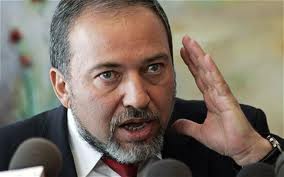
Foreign Minister Avigdor Lieberman


Netanyahu said that in each of the recent attempts “Iran and its proxy Hezbollah was behind the attacks.” Israel, he added, “will continue to work with local security forces to stop attacks and will act with a strong hand” and systematically fight international terror, “which comes from Iran.”

Foreign Minister Avigdor Lieberman took it a step further, warning that Israel knows exactly how to identify those responsible for the attacks.

Also today, a Georgian worker employed by the Israeli embassy in Tbilisi alerted police after noticing a suspicious object attached to a car assigned to the Israeli envoy to the country. The object turned out to be a grenade-like explosive device, according to Israeli officials.
Imad Mughniyah

Today’s attempts come one day after the fourth anniversary of the targeted elimination of Hezbollah’s deputy leader and terror mastermind, Imad Mughniyah, which the Islamist organization blames on Israel.
Mostafa Ahmadi-Roshan 

Israeli officials say that Hezbollah takes orders directly from Iran. Any Hezbollah attack on an Israeli target would need to be ordered by Tehran, the officials say.

Today’s attacks follow the assassination of several nuclear scientists in Iran. Tehran has blamed Israel and the U.S. for those assassinations.


Good Shootin' Bi Bi


Tuesday, January 31, 2012

Let Me Break This Tax Thing Down For You One Last Time


If You Believe This, Then, You Are Easily Fooled


It’s a sly bit of linguistic manipulation. Who could possibly be opposed to asking others to pay their “fair share”? Besides me? In theory, everyone supports “fairness.” I do, certainly. So when President Obama used his State of the Union address to trumpet “fairness,” the Democrats seized on the term, heralding it as their new public-relations concept of choice.

When it comes to taxes, a definition of fairness suited to liberty is the demand that each person pay a reasonable amount of money into the system to defend our Constitutional rights. Because this is what our system is meant to do, this is a reasonable request. The proper purpose of government is to safeguard individual rights. People can be reasonably required to surrender some of their money to protect them.

Our rights certainly aren’t being properly safeguarded. But this is not what Obama means when he insists that wealthy people are not paying their “fair share.”
Some of those lied to fools right here

To begin with, Obama’s trite definition of the rich — “millionaires and billionaires” — is a fantastic lie. The federal income tax system is divided into tiers, the top one capped off at $250,000 gross earnings. Someone making $10,000,000 annually pays the same federal income tax rate as someone earning $275,000. Collectively, the top ten percent of earners pay over 70% of federal taxes.


Aside from the simple contention that this money justly belongs to the people and not the government, there is a basic economic argument against raising these people’s taxes: these people are very often small business owners, and so much of their money is being funneled right back into the business. This enables growth and creates jobs for millions of Americans. Every extra dollar seized by the federal government is a dollar not going toward creating jobs that represent real prosperity. The CEOs of Fortune 500 companies might be able to “handle” a tax increase — but for a small business owner, that could mean tens of thousands of dollars that make the difference between hiring a new employee or expanding into a new market. To whom is that fair, exactly?

In their public-relations offensive, the president has proposed a manipulative idea called the “Buffett Rule,” which, as the president would have it, means that we shouldn’t have a tax system in which billionaires don’t pay as much into the system as their secretaries. Michelle Obama even invited Warren Buffett’s secretary as her special guest at the State of the Union — a slot typically reserved for national heroes.
Anointing a liar, Warren Buffett

Warren Buffett’s secretary makes hundreds of thousands of dollars every year, so she seems like an odd choice for an object of left-wing pity. I’m certain that most conservatives would be glad to support a tax cut for people like her — “the rich,” in left-wing parlance — but, of course, Obama being Obama, the object of this game is not to make Buffett’s secretary richer, but to make Warren Buffett poorer.
Warren Buffett's secretary Debbie Bosanek

There is, in fact, a reason that Buffett pays a lower rate of taxes than his secretary: he makes money through capital gains, the rate of which is 15%. His secretary makes her money through personal income, which is capped off at 35%. By conflating two different taxes, Obama deliberately creates a false impression that millionaires have rigged the system to pay fewer taxes, when in fact anyone at all making money through capital gains will pay less.


The capital gains tax should not be hiked. It should be abolished: there should be every incentive to invest in American businesses and promote private-sector growth. This investment does far more for Americans seeking work than any dollar chewed away at by bureaucracy and special interests. Anyone choosing to risk his money in the market should be entitled to keep every cent of his earnings.

But Obama, going back to his leftist roots, is actually motivated by envy and resentment, not justice and fairness. Previously, he has admitted that he would still support an increase in the capital gains tax even if it would lead to less revenue for the federal government, this statement should ring home for you, he's not concerned with debt reduction, he only wants to level the playing field and totally cripple the American economy. This, in the name of “fairness.” His game is up: he doesn’t want to help make the poor richer. He wants to make the rich poorer.

In the final analysis, the only consistent definition of “fair share” in Obama’s world is this: however much money the left needs to craft the world in their image.
The Ideal Democratic World

Thursday, January 19, 2012

Is Your Gun Out Of Control?


The Obama administration is set to release a series of reforms to the current gun law, White House Press Secretary Jay Carney said on Thursday.

The reforms, which are being crafted by the Department of meetings with relevant stakeholders in the Second Amendment debate. But in a nod to the difficulties of getting legislation through a Republican-run House of Representatives, only executive orders or administrative actions -- and not an actual bill -- are expected to be handed to Congress.

Administration officials were coy on the specifics, from the reforms the Department of when it would actually make those recommendations.
Eric holder

The president directed the Attorney General to form working groups with key stakeholders to identify common sense measures that would improve American safety and security while fully respecting Second Amendment rights," Carney said at Thursday's briefing.

That process is well underway at the Department of Justice with stakeholders on all sides working through these complex issues and we expect to have more specific announcements in the near future." only say "not far in the future." Another administration official said weeks would be an appropriate measurement.


When the recommendations do come, it will represent the most comprehensive move on the gun control front from this administration to date The president has largely punted on the issue since entering the White House, save issuing carefully worded rulings on local gun laws or bans.
Gabrielle Giffords

The Giffords shooting had, seemingly, upped the pressure to implement reforms. Obama himself used the occasion to pen an op-ed for the advocating for stronger state- to-state coordination with respect to gun data, expedited background checks and greater enforcement of the laws already on the books. The Department of Justice meetings commenced not too long later and have continued over the course of several months, according to an administration official. They are now finished.

The end result, one source close to the discussions said was a package of reforms "not huge in scope." They are largely expected to mirror the topics covered in the president's op-ed. Gun control advocates have pushed for more, including legislation that would limit the size of magazines -- such as the 32-round magazine that Gifford’s' shooter used -- or a bill that would force private sellers to conduct background checks at gun shows -- which was pushed in the wake of the Virginia Tech shooting.

Still, executive actions offer something that legislation doesn't: guaranteed results. And as one gun control advocate told the Huffington Post, there are ways to "use these administrative changes to obtain similar results."


Published with Blogger-droid v2.0.2

Tuesday, December 20, 2011

U.S. Troops Exit Iraq: Dinner Will Soon Be Served - - Iran


Although the Iraqis are observing nationwide celebrations, as the last of U.S. troops left the country on Sunday, there’s an increasing amount of uncertainty in the air. With many asking, whether the war was worth it, there’s an even greater number of people wondering, what will be the future of Iraq.
Bashar Assad

The U.S. military's departure from Iraq opens the door to expanded Iranian influence in the Middle East, though that door could close fast if Iran's closest Arab ally Bashar Assad falls from power in Syria.

In the last flag raising ceremony marking the end of war in Iraq, Defense Secretary, Leon Panetta addressed the U.S. troops saying that “To be sure, the cost was high -- the blood and treasure of the United States and also for the Iraqi people. But those lives have not been lost in vain. They gave birth to an independent, free and sovereign Iraq, but, for how long? Not many Iraqis buy that notion.

The uncertainties looming over the Middle East in the wake of President Barack Obama's Re-affirmation to remove all U.S. troops by the end of this month, fulfilling a campaign promise to end the unpopular war and abandoning efforts to negotiate an extension of the year-end deadline agreed to by the Bush administration in 2008.


Muqtada al-Sadr
There is growing concern about Iraq's ability to defend itself and counter Iranian influence after U.S. troops withdraw, and too many in the White House mistakenly believe that "a stay-on force" is not a vital U.S. interest and risk alienating an important ally, moreover, as the deadline approaches, the risk is if we retreat from Iraq, Iran take over. Of course, there are risks to staying on as well. One Shiite firebrand cleric, Muqtada al-Sadr vows to return to armed resistance unless all U.S. forces leave on schedule.


What's really at stake is whether or not Iran, which has been trying to turn Iraq into a satellite state for several years, will finally get its way. And the reason they would is because without U.S. troops there, Iraq would basically have no military ability to resist Iran on any kind of level; not their militias, which they keep in Iraq, not their conventional forces, not their missiles. And so you're going to have an Iraqi government, which is already a little bit inclined toward Iran, under a lot of pressure to go along with whatever Iran wants.


 Prime Minister Nouri al-Maliki
Here's a point that needs to be made: the government and Prime Minister Maliki has always been a little bit pro-Iranian. His coalition is heavily pro-Iranian because he's dependent on a Shiite party that is basically an Iranian client, just like Muqtada al-Sadr, who I've mentioned. And he's supposed to have a coalition with the other side, the part that resists Iran, but that coalition really hasn't worked out. It's basically split up. So the Sunni parties who would resist Iranian influence are currently out of power at the moment.


At first glance, that would make Iran the big winner, especially if the U.S. move heralds a tectonic shift of power in the strategic Persian Gulf region as the United States shifts its military focus to East Asia and the Pacific. But the tumult from the Arab Spring, on top of the end of the nearly nine-year Iraq War, has made the rivalry between Iran and the U.S.'s Arab allies even trickier and predictions more cloudy.

No longer will tens of thousands of American troops be stationed along Iran's western border. They're leaving behind an Iraqi government dominated by Shiite Muslim parties beholden to the Iranians, who sheltered them for years when Saddam Hussein and his Sunni-dominated Baath regime were in power.

With the American military presence reduced to a few hundred members of an embassy-based liaison mission, Iran is likely to step up infiltration of Iraq's intelligence services — the key to manipulating Iraq's internal politics — and expand its links to both Shiite and Kurdish politicians, to the alarm of the country's Sunni minority.
Civil war between the Shiite and Sunni

The politicians are still feuding to get into power, and the violence on the streets of Iraq continues as usual, though at a scale much lower than it was at the time war began. The civil war between the Shiite and Sunni groups continue to strike back at each other. "Nobody here wants occupation. This withdrawal marks a new stage in Iraq's history," said Karim al-Rubaie, a Shiite shop owner in the southern city of Basra."The politicians who are running this country are just a group of thieves. These politicians will lead the country into sedition and civil war. Iraq now is like a weak prey among neighboring beasts. The prime minister currently serves as his own defense minister and interior minister because he can't get anybody to agree who those ministers ought to be.


Secretary of Defense, Leon Panetta

But the new secretary of defense, Leon Panetta, and U.S. military commanders, I think, would very much like to see U.S. troops stay there because they're worried about this Iranian problem and the larger Iranian problem in the region. Former Secretary of Defense Gates said publically that he would like to see U.S. troops stay precisely because of the Iranian factor. But the civilian leadership and the Obama administration, the White House in particular, is much more ambivalent.
So they've sort of taken the view, well, we'll think about it if you ask us. And Panetta added in public, make a decision, damn it, were his words. So my thought was those are not the kind of coaxing that's going to get the right decision.
Lt. General Babaker Zebari


Aware of the concerns of the people, Iraq’s military chief of staff, Lt. General Babaker Zebari assured that his troops are fully capable of controlling the situation. "There are only scattered terrorists hiding here and there and we are seeking intelligence information to eliminate them," Zebari said. "We are confident that there will be no danger."

Moreover there are fears of power concentration into the hands of a single person. The Sunni leader, Ayad Allawi, despite of getting majority of votes in the last year’s parliamentary elections lost the premier post to Al-Maliki due to his support from the Shiite political parties. Iraqi’s also fear that if Iraq became more vulnerable than before, this American occupation might be replaced by some indirect occupation from the neighboring countries.


As the second most populous country in the Gulf, with some of the world's largest proven petroleum reserves, an avowedly pro-Iranian Iraq would be a game changer in the power struggle between Iran and the U.S.-backed, conservative Gulf states led by Saudi Arabia.

Iran already wielded considerable influence in Iraq even when U.S. troop strength approached 170,000. The U.S.-led invasion of 2003 produced a strange alliance between the Americans and religiously based Shiite parties tied simultaneously to both Washington and Tehran. Prime Minister Nouri al-Maliki, a Shiite who had been cool toward Iran, has moved closer to the pro-Iranian groups since a political crisis in 2010 nearly cost him his job.

With the American military gone, Tehran's prospects for bolstering those ties in Iraq look bright.

At closer examination, however, the future appears less certain. Much will depend on how the key players — including the United States — maneuver diplomatically through the new environment created by the end of the Iraq War.
"The United States must succeed in limiting and countering Iranian influence in Iraq and in creating Iraqi forces that can defend the country. "The United States must also restructure a mix of forward-deployed U.S. forces and ties to regional powers that can contain every aspect of Iran's military forces and political ambitions."

Friday, December 2, 2011

Unemployment Rate Drop: Their Playing With The Numbers Here; Don't Be Fooled


The White House got a boost today from the Bureau of Labor Statistics, which released moderately Positive?, jobs data for November and revised its October and September numbers higher, pushing the official unemployment rate down to 8.6% from 9%, the lowest level in two years.


Here's the Disclaimer: There are roughly 3.9 million LESS jods to be had here in America since the economic recovery of 2009.

The new number resurrects the possibility of unemployment dropping below 8% by election day, the threshold below which Obama’s chances for a second term improve dramatically, if conventional political wisdom is correct. Even the impression of improvement may be enough to boost Obama’s reelection chances, and the spike in consumer confidence earlier this week suggests the trend may be heading that way.


Here's another Disclaimer:  Much of November’s improvement in unemployment came from the fact that the pool of people looking for work dropped sharply as 315,000 Americans left the labor force. The revisions of past months suggest that BLS is missing something. The BLS uses two surveys to gauge the state of employment in America: the payroll survey and the household survey, which canvass homes and businesses separately. The payroll survey gets revised twice as new receipts data and other figures come in. I don't care what anyone say; these figures just don't make sense
Graduates to unemployment

 Employers added 140,000 jobs across most private sectors in November, offsetting continued declines in government employment. Public employee rolls dropped by 20,000, the 10th time in 11 months that state and local government employment has shrunk.

Here’s where they slip up;  The battered construction sector saw payrolls fall 12,000 after losing 15,000 jobs in October. 120,000 jobs were created in November but it takes upwards of 100,000 simply to which is enough to keep the unemployment rate from going up. 


This number of new jobs is not enough by itself to absorb all the new workers trying to entering the labor force and reduce the fraction of people that are currently unemployed. Fuzzy math problem; if  315.000 people stopped looking for work in November and 120.000 jobs were created minus 177.000 jobs lost for the month of November, Then "How is the unemployment rate dropping?" couple that with that 3.9 million jobs gone for good. Do you see it now?


Still, the shadow of the unresolved crisis in Europe continues to hang over the U.S. recovery. If the E.U. fails next Friday to deliver on hints of tighter integration of fiscal and monetary controls, the markets will tank, and rates for borrowing for European banks will spike, increasing the likelihood of a major bank failure. That could become the “Lehman Event” triggering another global credit crisis and potential recessions worldwide.

A new Rutgers University study shows that only 7% of those who lost jobs after the financial crisis have returned to or improved upon their previous financial position and lifestyle. The vast majority in the study's survey say that have diminished lifestyles, with about 15% saying they have seen drastic reductions in their incomes.

And those with less education saw more job losses during the downturn. Even those who landed a job made significantly less than before the Great Recession.

Government workers are getting the boot.

Employees of local and state governments probably have the least reason to celebrate. Whichever direction the unemployment rate moves seems almost irrelevant for them, as governments grapple to close budget gaps and shed workers. In November, the downward trend continued as the public sector lost 20,000 jobs – 5,000 of which came from the U.S. Post Service.


Consider this fact, this rate of job growth is barely enough to keep up with the growth in the working-age population. So we’re not making progress on the backlog of more than 13 million jobless Americans, and another 11 million working part-time who’d rather have full-time jobs.

Retail jobs constituted a third of new private-sector employment in November. Retail jobs tend to be unstable, temporary, and low-paying. Although the BLS is supposed to adjust for seasonal employment (i.e. Christmas), it doesn’t take account of the fact that more and more Americans have been pushing up their Christmas buying to before Thanksgiving. So some of these jobs may not be around very long.

Hourly earnings are down, as are real wages. So to some extent Americans have been substituting lower wages for lost jobs – either by accepting lower wages at their current place of employment, or getting the boot and settling for lower wages elsewhere. A job is better than no job, of course, but a job with a lower wage isn’t nearly as good as a job with at the same or better wage.


Another reason for November’s job growth is that American consumers – whose spending accounts for about 70 percent of the economy – increased their spending. But this can’t continue because, as noted, wages are dropping. They spent more by cutting into their meager savings. Don’t expect this to last.

Finally, there’s the wild card of the rest of the global economy – the European debt crisis and the high likelihood of recession in Europe, the slowdown in China and India, slower growth in developing nations. Some of our jobs depend on exports, which will drop. Others are keyed to the financial sector, which is being hit directly.
champagne For One

Two final wild cards closer to home: The Fed, and Congress. The Fed meets in two weeks to decide on further monetary easing. With today’s report, the odds of easing are down, unfortunately. Believe it or not, several Fed members are worried about inflation.
And if Congress refuses to extend the payroll tax cut and/or unemployment benefits by December 30, it will create another drag on the economy. When people ask me what Congress is likely to do I always say the same thing: The odds are in favor of nothing.

So while today’s jobs report is in the right direction, it’s way too early to break out the champagne.